
The 24th PPCDL Workshop Season: Training Members on Key Plant Pathogens and Diagnostic Techniques
Karen Snover-Clift and Barb Riker, Cornell University (NEPDN); Eric Newberry and Gem Santillana (USDA-APHIS-PPQ-S&T, PPCDL)
The Communicator: Volume 7, Issue 7, August 2026
2026 marked the 24th anniversary of the collaboration that became the NPDN-PPCDL advanced diagnostic workshops, held annually at the USDA’s Plant Pathogen Confirmatory Diagnostics Laboratory (PPCDL). The workshop topics were offered virtually and in-person for a fourth year and included two required prerequisite courses in the NPDN’s learning management system. This article provides a review of the 2026 PPCDL Workshop season.
To all planning team members, instructors and participants - THANK YOU for another great workshop season!
Some 2026 workshop statistics
9 workshops
5 in-person workshops at the PPCDL (38 attendees)
4 virtual workshops (83 attendees)
7 different topics (*new topic for 2026)
Required prerequisites offered through LearnUpon
Best Laboratory Practices Workshop
ELISA Pre-course
March 2-25, 2026
Phytophthora 101 (in-person)
Plant Pathogen Diagnostic Certification Program* (virtual)
Implementation of Good Lab Practices* (in-person)
Phytoplasma Molecular Detection (in-person)
Sample Submission for Confirmatory Diagnostic Testing (virtual)
Introduction to Sanger Sequencing (virtual)
ELISA Fundamentals (in-person)
In total, the workshops covered 15 days over four weeks and a total of 121 course completions.
New Topics for 2026
Two new topics were implemented for the 2026 season: the virtual Plant Pathogen Diagnostic Certification Program Workshop and the in-person Implementation of Good Lab Practices for DNA Extractions and qPCR.
Returning favorites in 2026
Several previous topics were requested in 2026 by diagnosticians that had not yet experienced these workshops. A perennial favorite, Phytophthora 101, kicked off the workshop season and was followed by a week of two topics held back-to-back (Implementation of Good Lab Practices for DNA Extractions and qPCR and Phytoplasma Molecular Detection). A repeat of Implementation of Good Lab Practices for DNA Extractions and qPCR was held in week three. The in-person workshops concluded in week four with ELISA Fundamentals.
These in-person sessions continue to be extremely valuable for a multitude of reasons.
Diagnosticians:
- learn from the PPCDL scientists that perform these procedures on real-world samples
- gain experience by completing all steps of the process
- receive guidance and tips to achieve successful runs
- operate a variety of equipment and use supplies that work best for the job
- learn how to analyze and interpret the results
Three topics were offered virtually in 2026; Plant Pathogen Diagnostic Certification Program was offered twice on different days, Sample Submission for Confirmatory Diagnostic Testing, and the two-day Introduction to Sanger Sequencing.
To date, the PPCDL instructors have developed 28 different topics presented in 148 individual workshops. The number of training days spans almost one year, with 358.5 days of training provided since 2003, resulting in 1,374 trainee course completions. (Participant comments on training appear with group photos).
LMS Best Laboratory Practices Requirement-Year 3
The Best Laboratory Practices (BLP) workshop was first offered in 2023. Beginning in 2024, a new policy required participants to complete this course before attending any PPCDL Workshop. As of last year, a total of 146 NPDN members, partners and colleagues completed the BLP workshop, either in a live session or online. In 2026, an additional 24 participants completed the LMS BLP course to be cleared for attending a PPCDL workshop.
All LearnUpon users have access and are welcome to take the BLP workshop course whenever it is convenient for them to do so. Some have shared that they use the course as a component of their new hire orientation process. If you want to use it, it is available to the NPDN membership. An additional 9 people took the course, even though they were not required to do so. With these additions, a total of 205 have completed the BLP course to date.
The PPCDL Workshops are supported by the USDA-APHIS Plant Pest and Disease Management and Disaster Prevention Program under PPA 7721. These valuable training opportunities would not be available without this support and the commitment of the PPCDL scientists and leadership.
Best Laboratory Practices Prerequisite Course 2026 - Required to attend a PPCDL Workshop:
Participants: Tessa Tigges (Bartlett Tree Experts), Seyed Mohammad Rouhani (Missouri Dept. of Agriculture), Nyla Zorbas (West Virginia University), Jessica Velte (University of Florida), Maisha Lucas (Hawaii Dept. of Agriculture and Biosecurity), Predeesh Chandran (Clemson University), Sadie Seaman (Pennsylvania Dept. of Agriculture), Jeremy Daniel (Colorado State University), Mandolina Fitzgibbon (University of Arizona), Emily Luna (Colorado State University), James Stewart (University of Maine), Paulliene Leanne Masungsong (North Dakota State University), Sarita Poudel (North Dakota State University), Megan Kennelly (Kansas State University), Qingquig Li (University of Arizona), James Woodhall (University of Idaho), Josh Rosnow (University of Idaho), Sanju Kunwar (University of Florida), Sal Greenberger (USDA-ARS through Colorado State University), John Spafford (Michigan State University), Jake Ueckert (Texas A&M University), Will Herbick (Pennsylvania State University), Ying Guo (California Dept. of Food and Agriculture), Megan McConnell (Bartlett Tree Experts).
Check out your group picture, or your NPDN colleagues, in the following images taken at each workshop.
Participant Comments:
Participants present instructors with a thank you card, they signed it with the following comments:
Olesya Malakhova (University of Florida) penned a group statement that said:
The participants want to thank the instructors for your efforts setting up and running the Phytophthora 101 Workshop. The workshop flowed well, plenty of time was allotted for questions, and was an overall great hands-on learning experience. Everyone we worked with was knowledgeable, accommodating and kind. We look forward to working with everyone in the future!
Shelly Furiosi (California Dept. of Food and Agriculture)
Thank you all so much for the valuable opportunity to come and strengthen our skills. It was a lot of fun!
Ana Cristina Fulladolsa Palma (University of Maryland)
Thank you! You truly are rock stars***
Monica Negrete (California Dept. of Food and Agriculture)
Thank you for this wonderfully engaging learning experience with Phytophthora- it’s such an important disease. I can’t wait to share all I have learned at my lab!
Seyed Mohammad Rouhani (Missouri Dept. of Agriculture)
Five-star workshop! Thank you!
Pedro Uribe (Texas A&M University)
Thank you for helping us this week.
Adam Schrankler (Minnesota Dept. of Agriculture)
Thank you for sharing your experience with us.
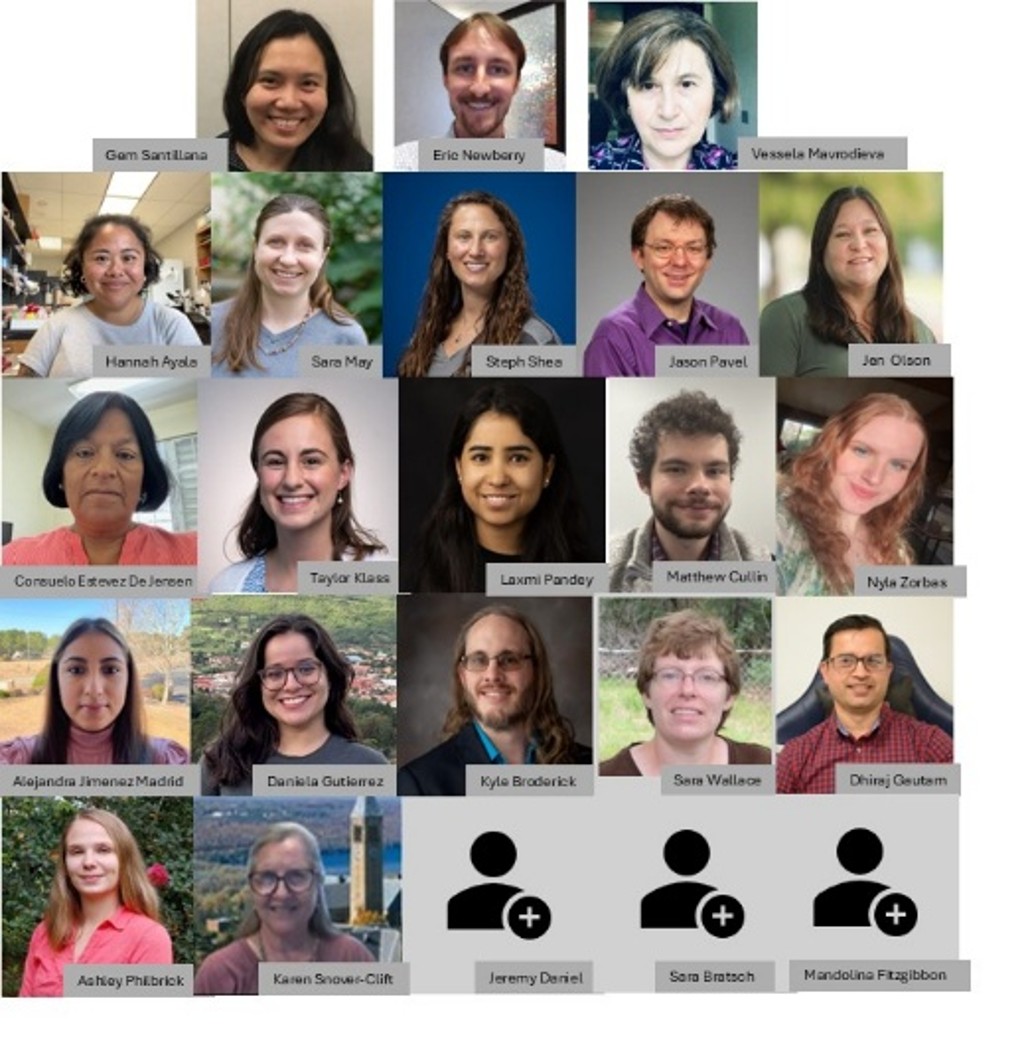
Not pictured: Jeremy Daniel (Colorado State University); Sara Bratsch (Minnesota Dept. of Agriculture); and Mandolina Fitzgibbon (University of Arizona).
First row (left to right): Kyle Broderick (University of Nebraska-Lincoln); Sara May (The Pennsylvania State University); Gabriela Benito (University of Hawaii); Felica Millett (The Connecticut Agriculture Experiment Station); Stephanie Shea (University of Maine); Haley Scott (Instructor, USDA-APHIS-PPQ-S&T PPCDL); and Francesca Rotondo (Ohio State University).
Second row (left to right): Zonghe Yan (Instructor, USDA-APHIS-PPQ-S&T PPCDL); Matthew Cullen (Missouri Dept. of Agriculture); Gianna Fernandez Soto (University of Puerto Rico); Ben Adducci, John Kaszan; and Shareef Abdelgadir (Instructors, USDA-APHIS-PPQ-S&T PPCDL).
Participant Comments:
Stephanie Shea (University of Maine)
As a participant of the PPCDL Good Lab Practices for Extraction & Real-time PCR Workshop, I gained valuable hands-on experience working directly with our regulatory partners while strengthening our laboratory’s diagnostic and biosecurity capabilities. The workshop provided training in good laboratory practices, quality management, USDA 526 permit orientation, DNA extraction procedures, and real-time PCR methodologies. This experience helped ensure our laboratory remains aligned with current regulatory expectations and standardized diagnostic methodologies while reinforcing proper technique, workflow organization, contamination prevention practices, and reporting standardization essential for high-quality biosecurity work. Additionally, the workshop strengthened collaboration and communication between diagnostic laboratories and regulatory partners, helping ensure consistency in best practices and implementation of molecular diagnostic protocols. This workshop also serves as a unique and highly valued national resource that advances plant diagnostic capacity by promoting standardized methods, shared expertise, and stronger coordination among laboratories across the country.
Francesca Rotondo (Ohio State University)
The laboratory hands-on activities were particularly useful to highlight the good laboratory practices (sanitation, spatial separation and organization), the importance of clear detailed work instruction, and the importance of proper controls across the whole process from DNA extraction to qPCR.
Matthew Cullen (Missouri Dept. of Agriculture)
I have already applied many of the instructions received in this workshop to methods and protocols in our local lab and it has improved consistency, quality, and confidence in our work and results.
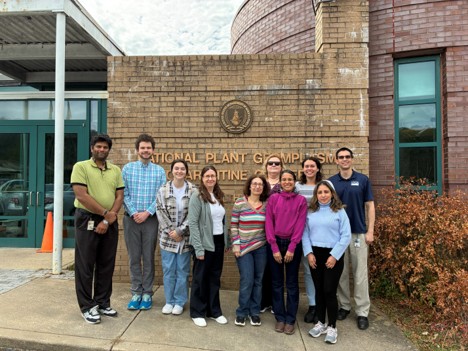
First Row (left to right): Brijesh Karakkat (Instructor, USDA-APHIS-PPQ-S&T PPCDL); Matthew Cullen (Missouri Dept. of Agriculture); Jessica Velte (University of Florida); Sara May (The Pennsylvania State University); Francesca Rotondo (The Ohio State University); Gabriela Benito (University of Hawaii); and Alejandra Jimenez Madrid (University of Georgia).
Second row (left to right): Christine Ngoan (North Dakota State University; Gianna Fernandez (University of Puerto Rico); and Jarred Yasuhara-Bell (Instructor, USDA-APHIS-PPQ-S&T PPCDL)
Participant Comments:
Matthew Cullen (Missouri Department of Agriculture)
Molecular testing for phytoplasmas has been challenging in my lab. The Phytoplasma Molecular Detection Workshop provided useful tips and tricks that I can apply when handling these samples, including the types of tissues to use and how to obtain positive controls for tests. The hands-on practice from start to finish helped reinforce better habits in the lab and is applicable for other types of testing as well.
Francesca Rotondo (The Ohio State University)
I have had a similar experience, struggling with false positives in the detection of phytoplasma using universal primers and nested PCR over the past two years. As a result, I have consistently had to send samples out for sequencing confirmation. The assay we learned, along with the different controls, has been a truly lab-changing experience. Additionally, PPQ Diagnostics shared a protocol adapted for the CFX96, which has been very helpful. It was also very helpful to attend the GLPs for Extraction & Real-time PCR Workshop before the Phytoplasma workshop.
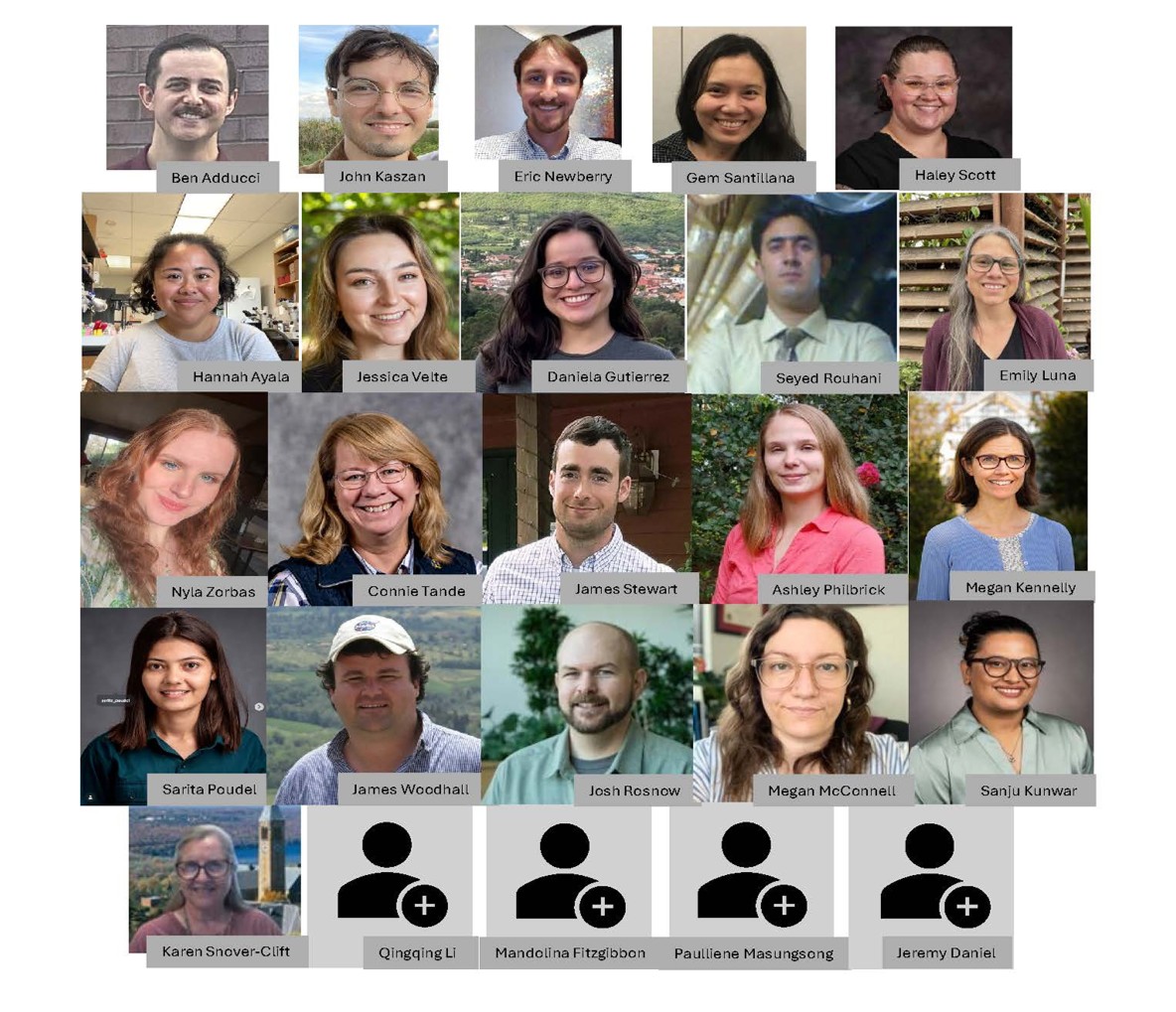
Not pictured: Qingqing Li (University of Arizona), Mandolina Fitzgibbon (University of Arizona), Paulliene Masungsong (North Dakota State University), and Jeremy Daniel (Colorado State University).
Participant comment:
Megan Kennelly (Kansas State University)
The Sample Submission for Confirmatory Diagnostics Testing Workshop provided a step-by-step outline of how to properly handle critical regulatory samples from start to finish. The trainers talked through all the key details about sample handling, filling out official forms, communication channels, shipping and more. The training was a great resource to boost confidence and help ensure smooth processes across NPDN.
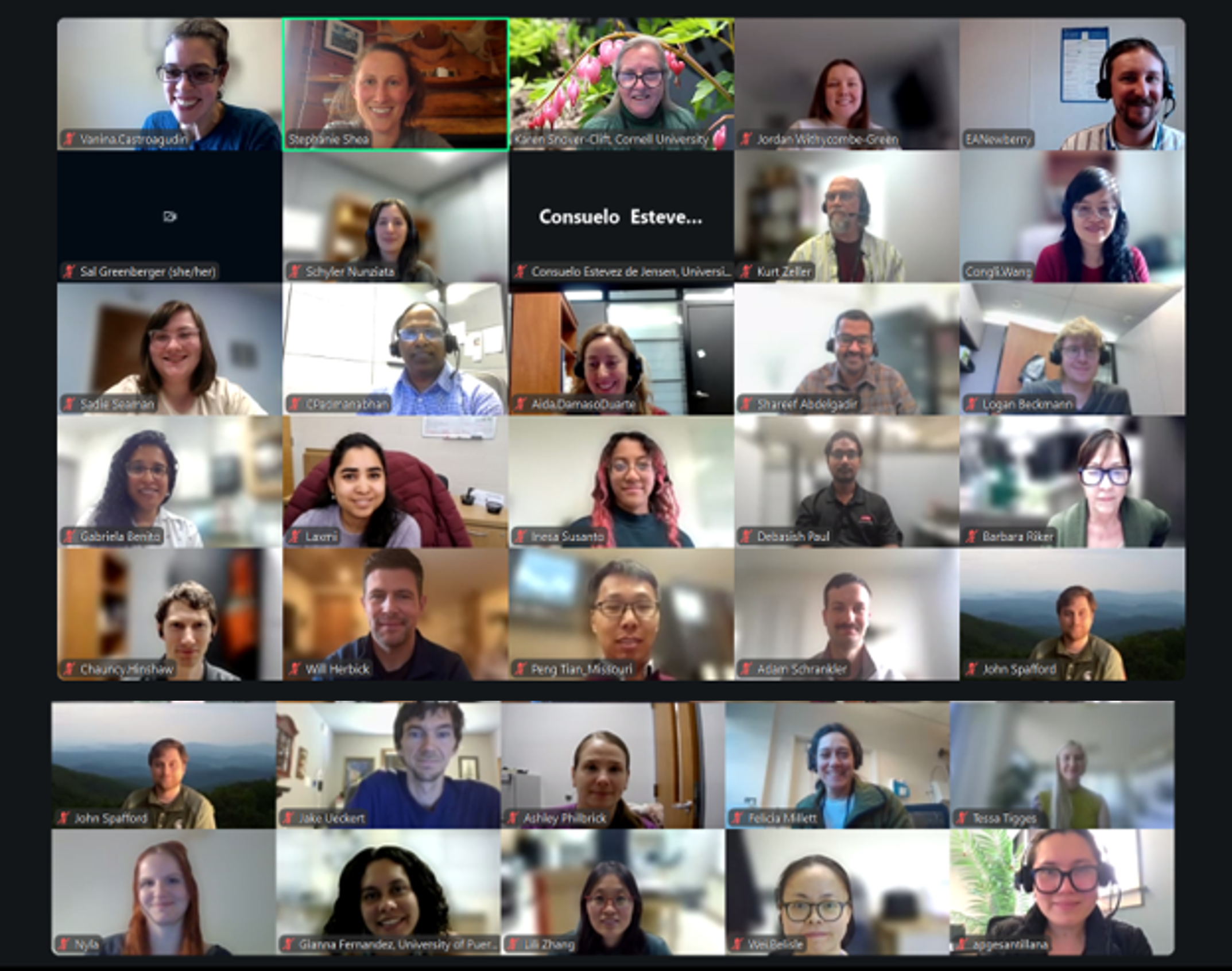
Participant comment:
Felicia Millett (The Connecticut Agriculture Experiment Station)
The Sanger course was really outstanding. I just wanted to say thank you and great job! It covered a lot more than I was expecting and was extremely helpful and relevant to where I am now as a diagnostician.
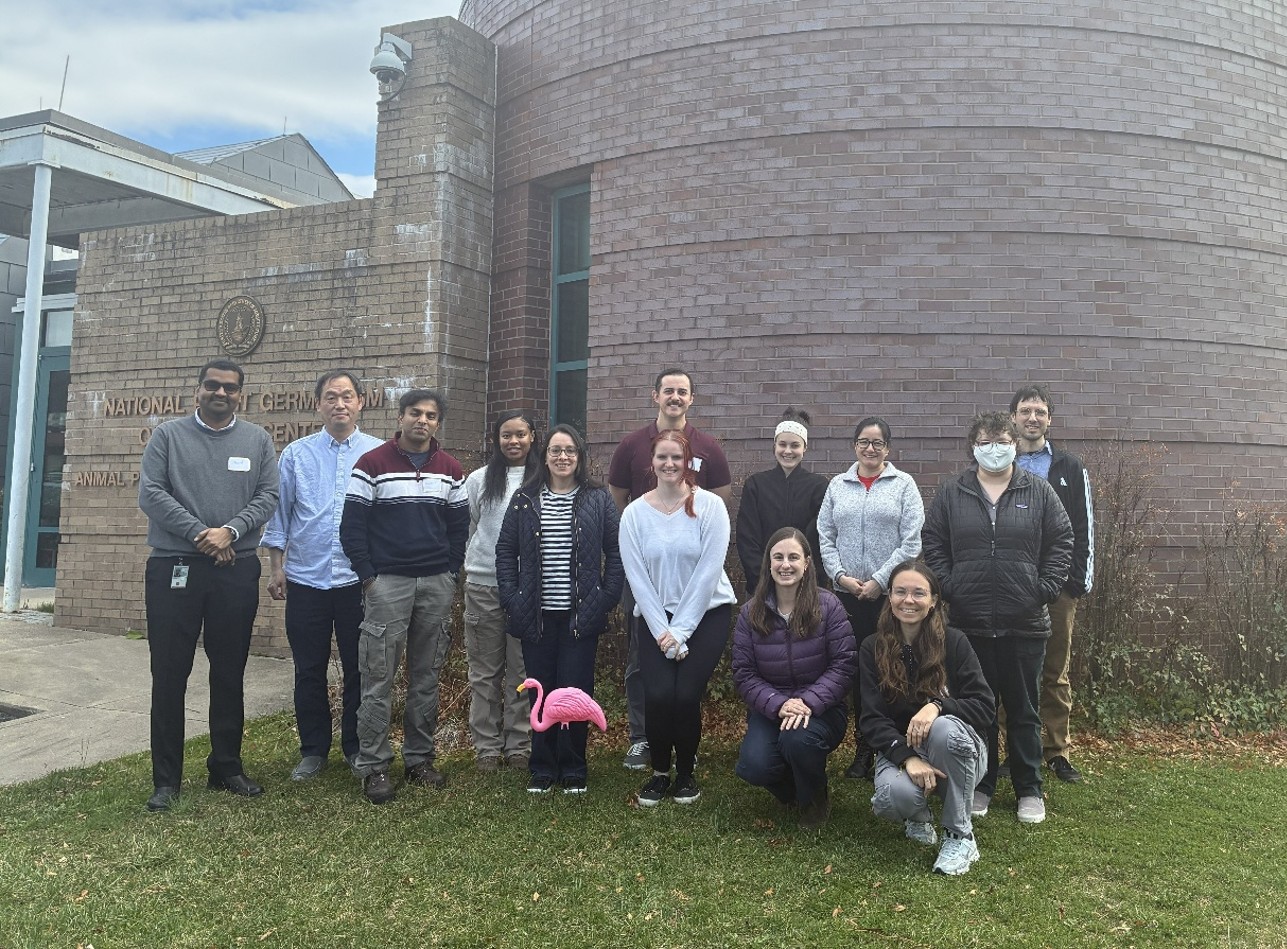
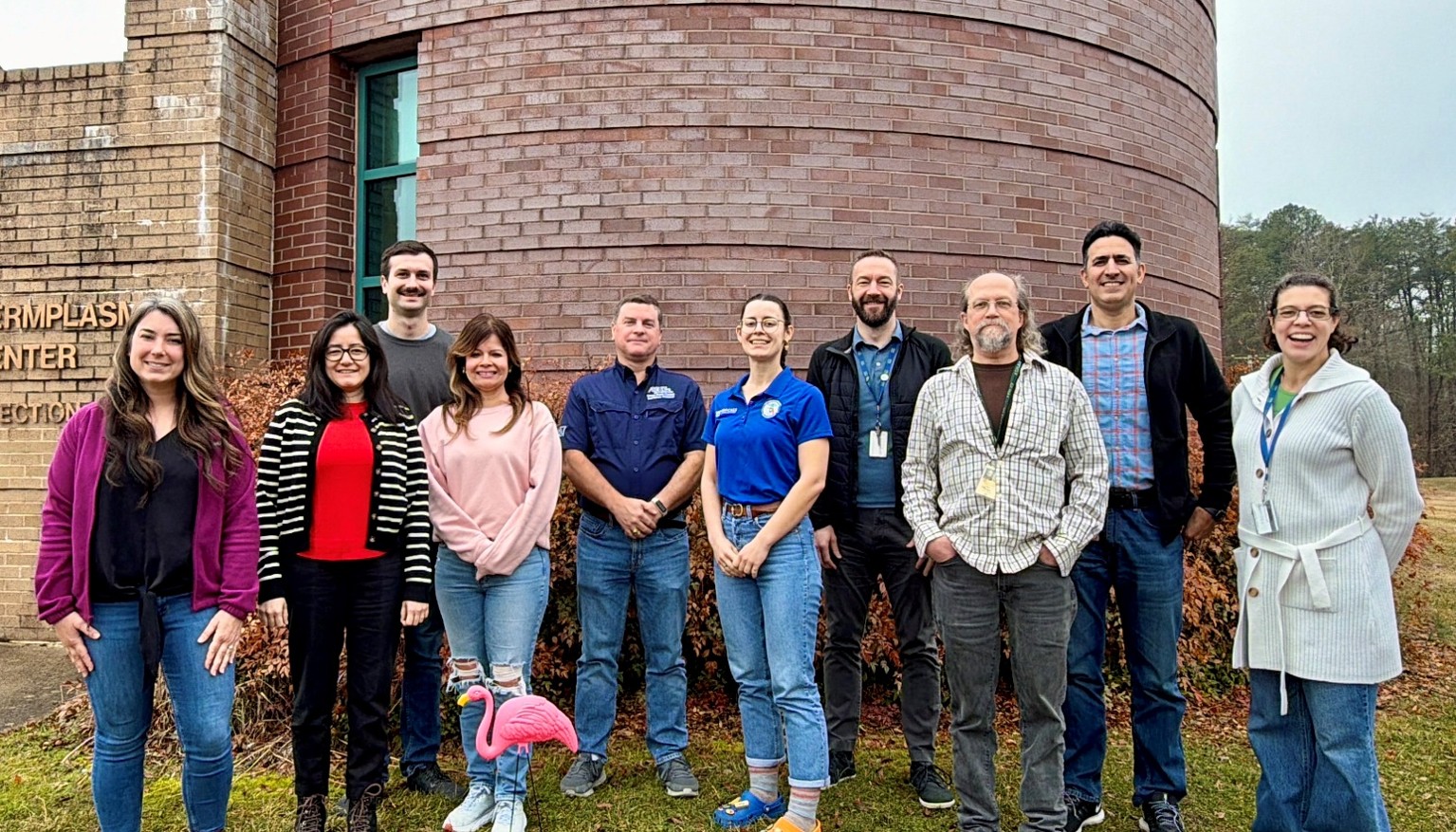
First row (left to right): Shareef Abdelgadir (USDA-APHIS-PPQ-S&T PPCDL); Zonghe Yan (USDA-APHIS-PPQ-S&T PPCDL); Predeesh Chandran (Clemson University), Maisha Lucas, (Hawaii Dept. of Ag. and Biosecurity), Keiddy Urrea-Morawicki (University of Rhode Island), Nyla Zorbas (West Virginia University), Taylor Klass (University of Arkansas), and Shelby Weber (University of Florida).
Second row (left to right): Ben Adducci, (Instructor, USDA-APHIS-PPQ-S&T PPCDL); Zlatina Mavrodieva (USDA-APHIS-PPQ-S&T PPCDL), Ana Cristina Fulladolsa Palma (University of Maryland); and Haley Scott and John Kaszan (Instructors, USDA-APHIS-PPQ-S&T PPCDL).
Participant comment:
Keiddy Urrea-Morawicki (University of Rhode Island)
Participating in the Good Lab Practices for Extraction & Real-time PCR training was a unique highly valuable experience. I acquired substantial knowledge and practical laboratory skills, which I am currently applying in my own laboratory. The hands-on activities, comprehensive explanations, and emphasis on real-world applications significantly enhanced the training’s effectiveness. The instructors demonstrated expertise and provided consistent support throughout the program. The organization and coordination of the training were excellent. Thank you again for giving us the opportunity to attend PPCDL Workshops.
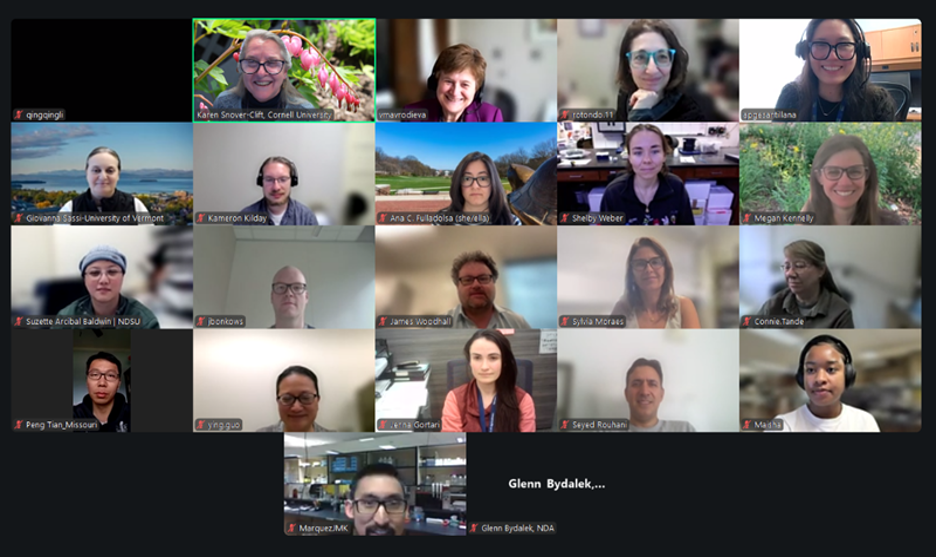
Participant comments:
Sylvia Moraes (University of Tennessee)
As someone who started working in plant diagnostics about three years ago and currently works in a small diagnostic lab, the PPCDL Workshops were extremely valuable for my professional development. The Plant Pathogen Diagnostic Certification Program Workshop provided training on proper sample submission, confirmatory diagnostics, and diagnostic certification procedures, helped me better understand critical steps in the diagnostic process, and improved my confidence in handling and evaluating samples. These workshops are a unique resource because they provide practical information that can be directly applied in daily diagnostic work, especially for smaller labs with limited training opportunities.
Giovanna Sassi (University of Vermont)
Trainings like this are an incredibly rare and valuable resource for diagnosticians transitioning laboratories into molecular workflows and play an important role in strengthening national diagnostic capacity across the NPDN and USDA-APHIS networks.
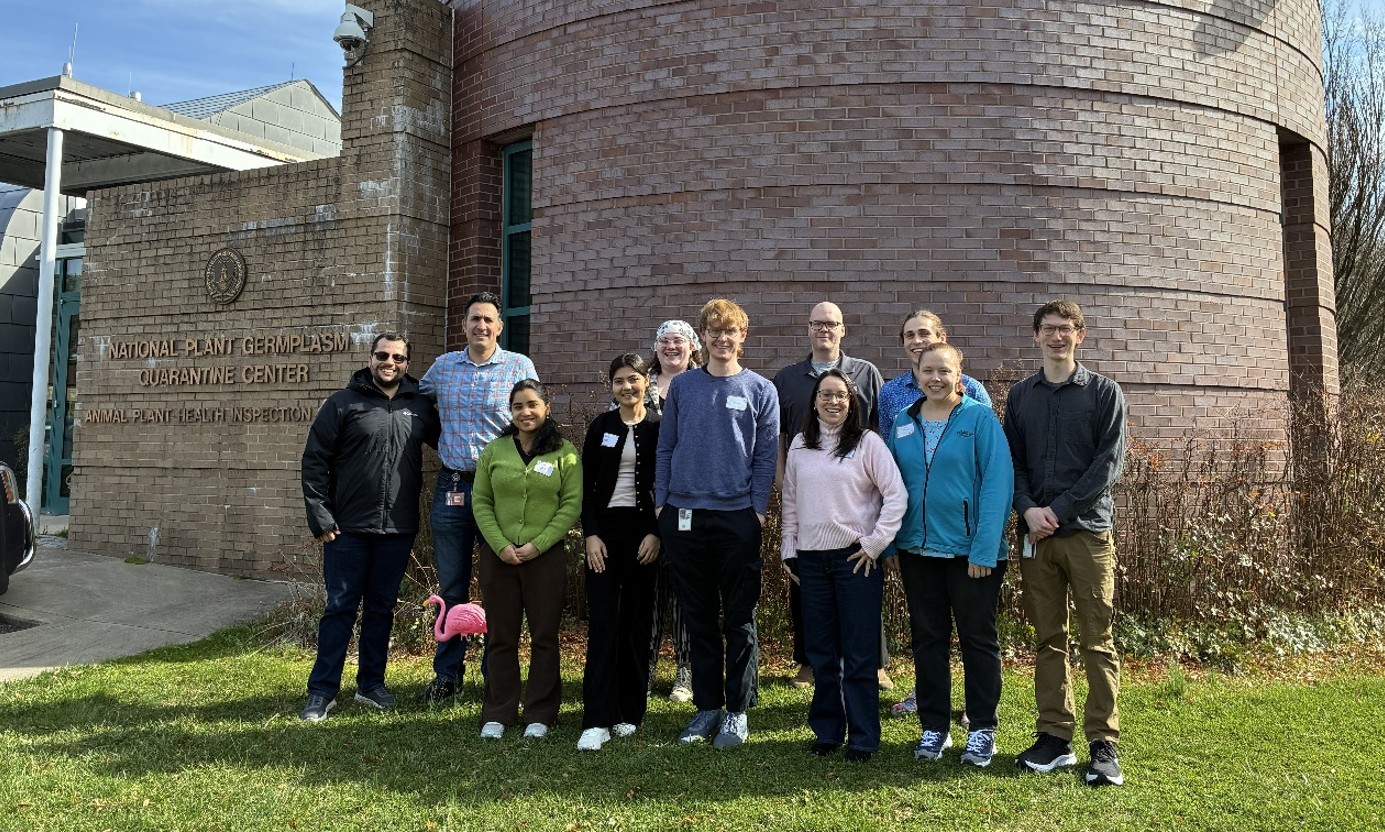
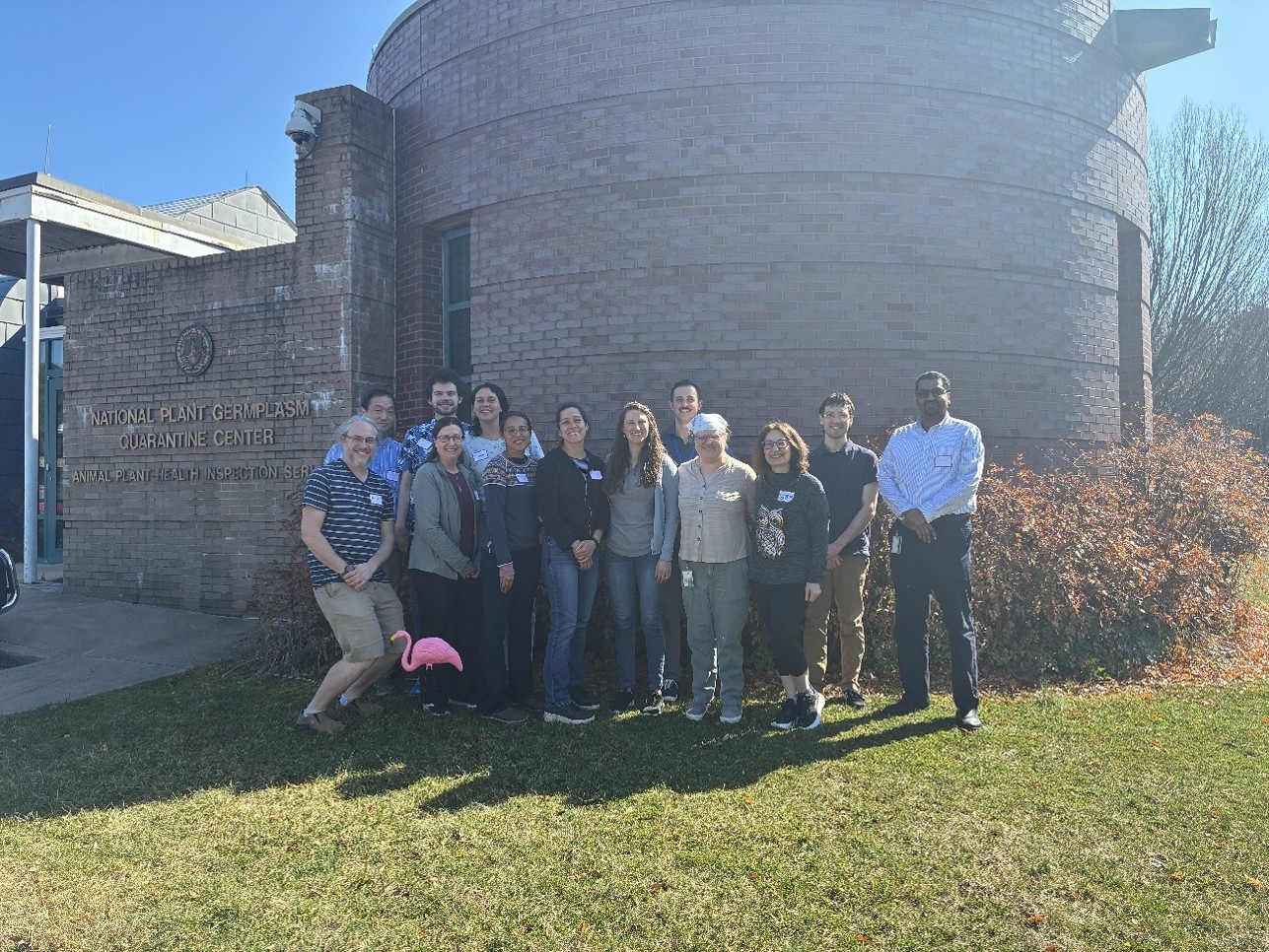
Front row (left to right): Marcus Marin (University of Florida); Seyed Rouhani (Missouri Department of Agriculture); Laxmi Pandey (University of Georgia); Sarita Poudel (North Dakota State University); Logan Beckman (USDA-APHIS-PPQ-S&T PPCDL); Keiddy Urrea-Morawicki (University of Rhode Island); Aimee Thapa (North Dakota State University); and Chauncy Hinshaw (Instructor, USDA-APHIS-PPQ-S&T PPCDL)
Second row (left to right): Sadie Seaman (Pennsylvania Dept. of Agriculture); John Bonkowski (Purdue University); and Cole Connolly (Assistant, USDA-APHIS-PPQ-S&T PPCDL).
Participant comments:
Laxmi Pandey (University of Georgia)
I very much enjoyed the ELISA Fundamentals Workshop and learned a lot from it. To me, it was one of the best hands-on workshops I have ever been to. I am very grateful for the opportunity and the time and dedication of the instructors.
Keiddy Urrea-Morawicki (University of Rhode Island)
Participating in the PPCDL ELISA Fundamentals Workshop with its hands-on training was one of the most unique and valuable learning experiences of my professional career. The training provided an incredible opportunity to work directly with DAS ELISA, prepare samples, run assays, and interpret results in a highest quality standards diagnostic laboratory setting. Being able to perform each step greatly improved our understanding of this diagnostic technique, laboratory accuracy, and the importance of proper sample handling and data analysis. The instructor and organization of the workshops were excellent. Thank you again for giving us the opportunity to attend these PPCLD Workshops.
